
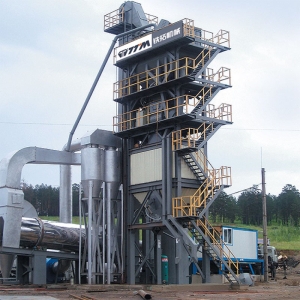
Modern infrastructure development increasingly emphasizes sustainability, efficiency, and long-term performance. As the demand for eco-friendly and durable road networks grows, smart asphalt plants have emerged as a cornerstone for achieving these goals. By integrating advanced automation, intelligent monitoring, and energy-efficient systems, smart asphalt plants not only produce high-quality asphalt but also contribute to sustainable and cost-effective infrastructure.
1. Intelligent Monitoring for Consistent Asphalt Quality
Smart asphalt plants are equipped with IoT-enabled sensors and monitoring systems that track:
-
Asphalt temperature and mixing consistency
-
Material moisture content and aggregate proportions
-
Machine operational status and energy consumption
This real-time data ensures consistent asphalt quality, which is critical for long-lasting roads and bridges. Contractors can also anticipate potential issues before they affect production, reducing maintenance and repair frequency.
2. Optimized Energy Efficiency
Energy consumption is a major factor in both cost and environmental impact. Smart asphalt plants provide:
-
Automated burner control to maintain precise temperatures
-
Optimization of fuel usage based on production needs
-
Reduction of excess heating or energy waste
By minimizing fuel consumption and emissions, these plants support eco-friendly road construction and align with carbon reduction goals.
3. Seamless Integration of RAP (Reclaimed Asphalt Pavement)
Sustainability in asphalt production is closely linked to the use of reclaimed asphalt pavement (RAP). Smart asphalt plants facilitate:
-
Accurate proportioning of RAP and virgin materials
-
Efficient mixing for high-performance asphalt
-
Hot and cold RAP recycling for various project types
This capability allows long-term infrastructure projects to reuse existing materials, conserve resources, and reduce landfill waste.
4. Predictive Maintenance and Reduced Downtime
Smart control systems enable predictive maintenance by:
-
Monitoring equipment wear and operational anomalies
-
Sending alerts for potential malfunctions
-
Allowing proactive interventions to avoid production interruptions
Reduced downtime translates into faster project completion, lower costs, and more reliable asphalt supply, all of which are essential for sustainable infrastructure planning.
5. Data-Driven Decision Making for Long-Term Planning
With integrated data analytics, smart asphalt plants provide valuable insights for:
-
Optimizing construction schedules
-
Planning maintenance intervals
-
Forecasting material requirements and energy needs
These data-driven capabilities support long-term infrastructure planning, ensuring roads, highways, and industrial pavements remain durable and cost-efficient over decades.
Conclusion
Smart asphalt plants represent a major step forward in sustainable road construction. By combining intelligent monitoring, energy efficiency, RAP integration, predictive maintenance, and data analytics, they enable contractors and governments to deliver long-lasting, eco-friendly, and cost-effective infrastructure.
TTM (Tietuo Machinery) provides RAP-compatible, smart asphalt mixing plants designed to support modern infrastructure demands and sustainable construction practices worldwide.