
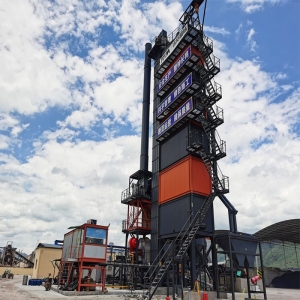
As the road construction industry evolves, advanced automation in asphalt plants has become a key driver for both cost efficiency and environmental sustainability. Modern asphalt mixing plants equipped with automated control systems not only improve production consistency but also optimize energy consumption, reduce material waste, and minimize emissions—supporting greener and more economical road construction.
1. Intelligent Process Control
Automated asphalt plants integrate intelligent control systems to monitor and manage all stages of production:
-
Aggregate feeding and weighing accuracy
-
Asphalt temperature and mixing time
-
RAP (Reclaimed Asphalt Pavement) proportioning and blending
This ensures consistent asphalt quality while reducing human error, which can lead to costly rework or material waste.
2. Energy and Fuel Optimization
One of the most significant benefits of automation is energy efficiency. Automated systems allow:
-
Precise burner and heater control to minimize fuel use
-
Optimized material heating schedules
-
Reduction of unnecessary energy consumption during idle periods
By cutting energy waste, asphalt plants can lower production costs and significantly reduce greenhouse gas emissions, aligning with environmental regulations.
3. Real-Time Monitoring and Predictive Maintenance
Automation enables continuous real-time monitoring of plant operations, including:
-
Equipment wear and mechanical stress
-
Temperature fluctuations and process deviations
-
System alerts for potential malfunctions
Predictive maintenance allows operators to address issues before they cause downtime, ensuring steady production and minimizing disruptions, which saves both time and money.
4. Seamless RAP Integration
Automated asphalt plants make RAP recycling more efficient by:
-
Calculating precise RAP-to-virgin material ratios
-
Adjusting mixing parameters automatically
-
Maintaining consistent asphalt properties with varying RAP content
This ensures sustainable asphalt production while maximizing material reuse and lowering raw material costs.
5. Data-Driven Insights for Long-Term Optimization
Advanced automation systems collect and analyze operational data, enabling:
-
Optimization of production schedules
-
Forecasting of material consumption and energy needs
-
Performance benchmarking for continuous improvement
Data-driven decision-making supports long-term cost savings, efficient resource utilization, and environmentally responsible road construction.
Conclusion
Automation in asphalt plants is no longer optional—it is an essential technology for reducing costs, minimizing emissions, and improving production efficiency. Intelligent process control, energy optimization, predictive maintenance, and seamless RAP integration combine to make asphalt production smarter, cleaner, and more sustainable.
TTM (Tietuo Machinery) offers advanced automated asphalt mixing plants designed to support sustainable road construction projects worldwide, helping contractors and governments achieve both economic and environmental goals.