
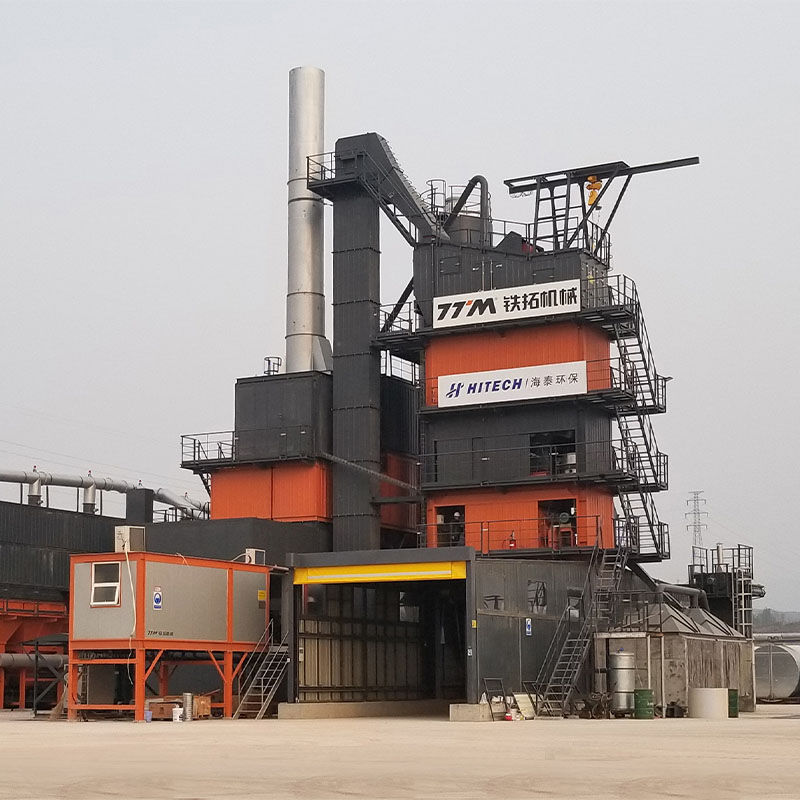
Dust emissions are one of the most visible environmental challenges in asphalt production. As environmental standards become stricter worldwide, effective dust control technologies have become a core requirement for modern asphalt mixing plants. Beyond compliance, proper dust management improves material efficiency, plant reliability, and workplace safety.
1. Main Sources of Dust in Asphalt Mixing Plants
Understanding where dust originates is the first step toward effective control. In asphalt mixing plants, dust is typically generated during:
-
Aggregate drying and heating
-
Material conveying and transfer points
-
Screening and mixing processes
-
Filler handling and storage
Without proper control, these dust sources can lead to environmental violations, material loss, and equipment wear.
2. Baghouse Filter Systems: The Industry Standard
The baghouse dust collection system is the most widely used and effective dust control solution in modern asphalt plants. Key advantages include:
-
High filtration efficiency for fine particles
-
Stable performance under continuous operation
-
Recovered dust can be reused as mineral filler
Advanced baghouse designs optimize airflow and pressure balance, ensuring consistent dust capture with minimal energy consumption.
3. Optimized Airflow and Negative Pressure Design
Effective dust control is not only about filtration but also about airflow management. Modern asphalt plants are engineered to maintain negative pressure in critical areas, which helps:
-
Prevent dust leakage at transfer points
-
Improve collection efficiency
-
Reduce emissions during high-capacity production
Carefully designed ducting systems ensure dust-laden air is directed efficiently to the filtration units.
4. Automated Monitoring and Control Systems
Intelligent control systems play an increasingly important role in dust management. These systems enable:
-
Real-time monitoring of pressure and filter performance
-
Automatic adjustment to maintain optimal filtration conditions
-
Early detection of abnormal dust levels
Automation helps operators maintain environmental compliance while reducing manual intervention and maintenance risks.
5. Supporting Measures for Comprehensive Dust Reduction
In addition to core dust collection systems, modern asphalt plants often integrate complementary solutions such as:
-
Enclosed conveyors and sealed transfer points
-
Optimized material loading and discharge designs
-
Regular filter cleaning and maintenance programs
Together, these measures create a comprehensive dust control strategy that supports clean and efficient asphalt production.
Dust control technologies are essential for modern asphalt mixing plants facing increasingly strict environmental regulations. By combining high-efficiency baghouse filters, optimized airflow design, and intelligent monitoring systems, asphalt producers can significantly reduce emissions while improving operational efficiency.
TTM (Tietuo Machinery) develops asphalt mixing plant solutions with advanced dust control technologies, helping contractors meet global environmental standards and build sustainable infrastructure.