
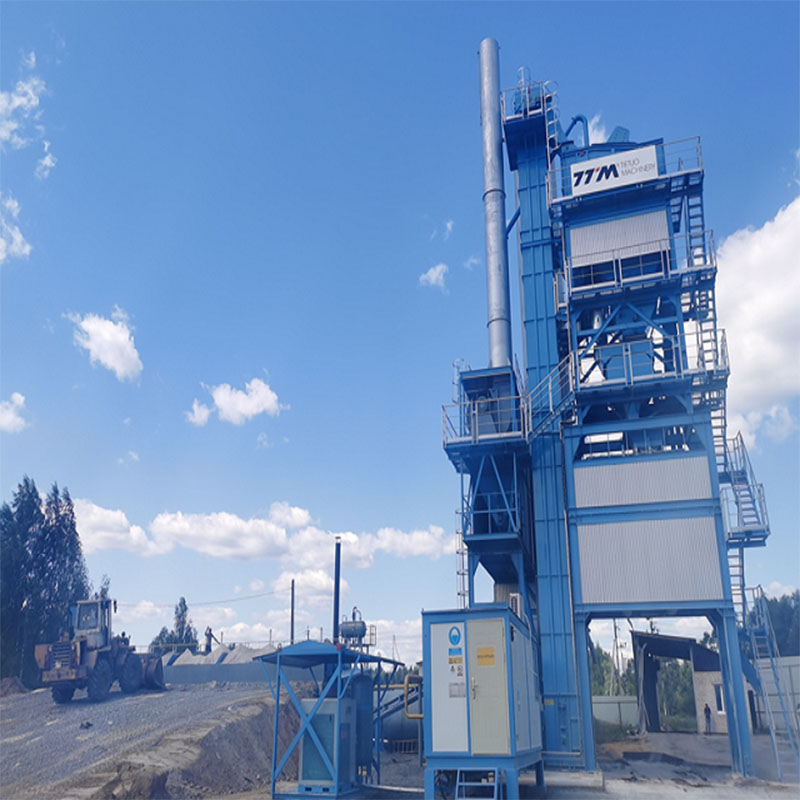
As global infrastructure development continues to expand, the road construction industry is undergoing a major transformation. Asphalt recycling and sustainable infrastructure solutions are no longer optional—they are becoming standard requirements driven by environmental regulations, cost pressures, and long-term performance expectations. Looking ahead, several key trends are shaping the future of asphalt recycling and sustainable road infrastructure.
1. Higher RAP Utilization Rates
One of the most significant trends is the increasing use of higher RAP (Reclaimed Asphalt Pavement) percentages in asphalt mixtures. Advances in mixing technology, temperature control, and material management allow modern asphalt plants to:
-
Incorporate higher volumes of recycled asphalt
-
Maintain consistent asphalt performance and durability
-
Reduce dependence on virgin aggregates and bitumen
This trend supports both cost reduction and resource conservation.
2. Intelligent and Automated Asphalt Recycling Systems
Automation and digitalization are becoming central to asphalt recycling operations. Future-ready asphalt mixing plants increasingly feature:
-
Smart sensors for temperature, moisture, and material quality
-
Automated adjustment of RAP ratios in real time
-
Predictive maintenance to reduce downtime and extend equipment life
These intelligent systems ensure stable quality and efficient recycling, even under changing site conditions.
3. Stronger Environmental Regulations and Standards
Governments and international organizations are introducing stricter environmental requirements for road projects, including:
-
Lower carbon emission limits
-
Mandatory recycling and material reuse targets
-
Environmentally compliant production equipment
As a result, RAP-compatible and energy-efficient asphalt plants are becoming essential for compliance in modern infrastructure projects.
4. Modular and Mobile Recycling Solutions
Flexibility is another major trend shaping sustainable road construction. Modular and mobile asphalt recycling systems enable:
-
Rapid deployment in remote or temporary project locations
-
On-site recycling to reduce transportation emissions
-
Scalable production capacity based on project demand
This flexibility supports decentralized construction and reduces the overall environmental footprint of road projects.
5. Integration with Circular Economy and Green Infrastructure Planning
Future road infrastructure will increasingly align with circular economy principles, where materials are reused across multiple project lifecycles. Asphalt recycling plays a key role by:
-
Extending the service life of existing pavements
-
Turning rehabilitation projects into material resources
-
Supporting long-term, sustainable infrastructure planning
As cities and regions adopt green infrastructure strategies, asphalt recycling will become a core component of road network development.
Conclusion
The future of road construction lies in intelligent, flexible, and sustainable asphalt recycling solutions. Higher RAP usage, smart automation, stricter environmental standards, and modular equipment design are shaping the next generation of sustainable road infrastructure.
With advanced RAP-compatible asphalt mixing technologies, TTM (Tietuo Machinery) is committed to supporting this transition and enabling greener, more efficient road construction worldwide.