
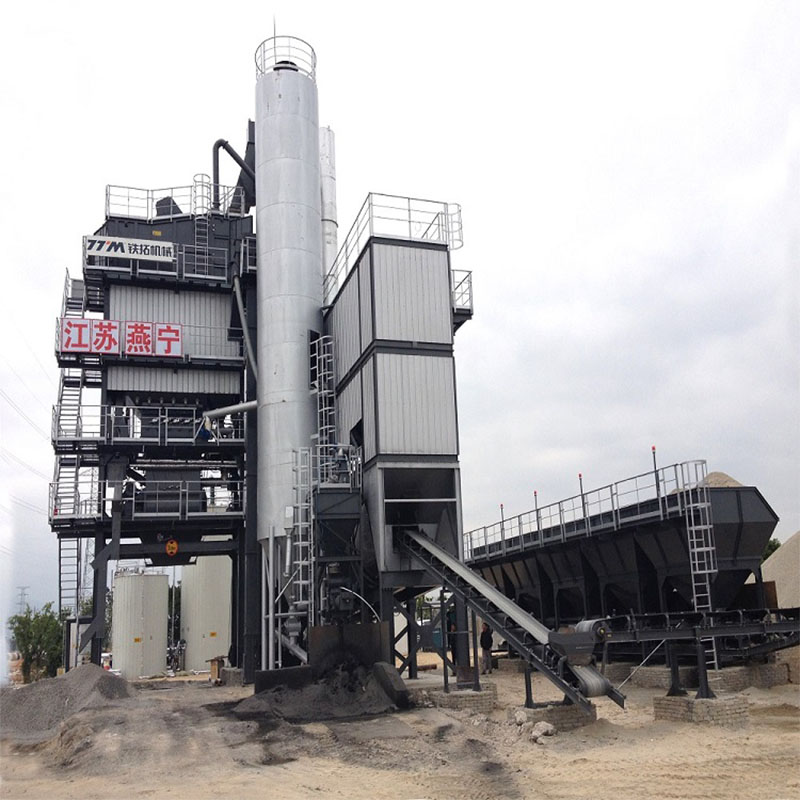
Reducing carbon footprint has become a strategic priority for modern road construction and asphalt production. With governments setting stricter climate targets and project owners emphasizing sustainability ratings, carbon reduction strategies in asphalt mixing plants are no longer optional. For contractors, project developers, and China asphalt plant manufacturers and suppliers, low-carbon production is quickly becoming a key competitive advantage.
1. Improve Energy Efficiency Across the Production Process
Energy consumption is the primary source of carbon emissions in asphalt production. Carbon footprint can be reduced by focusing on:
-
High-efficiency burners and optimized combustion systems
-
Improved thermal insulation in drying drums and pipelines
-
Stable temperature control to avoid unnecessary reheating
Lower energy use per ton of asphalt directly translates into lower CO₂ emissions and lower operating costs.
2. Increase RAP Utilization to Reduce Carbon Intensity
Using Reclaimed Asphalt Pavement (RAP) significantly reduces the carbon footprint of asphalt production by:
-
Lowering demand for virgin aggregates and bitumen
-
Reducing emissions from raw material extraction and processing
-
Cutting total energy required for heating new materials
Plants designed for flexible RAP integration are better positioned to meet carbon reduction targets in modern infrastructure projects.
3. Optimize Production Efficiency and Reduce Waste
Carbon footprint is also influenced by operational efficiency. Key optimization strategies include:
-
Reducing material waste during batching and mixing
-
Improving production stability to avoid rework
-
Minimizing idle time and inefficient start-stop operations
Efficient production management helps reduce emissions per ton of finished asphalt.
4. Adopt Low-Emission Combustion and Clean Energy Options
Advanced combustion control and alternative energy options support carbon reduction by:
-
Reducing excess fuel consumption
-
Improving combustion stability and heat utilization
-
Supporting gradual integration of cleaner fuels
While fossil fuels remain common in asphalt production, cleaner energy strategies are becoming an important direction for long-term decarbonization.
5. Use Digital Monitoring to Track and Manage Carbon Performance
Carbon reduction is difficult to manage without measurable data. Modern asphalt plants increasingly rely on:
-
Real-time monitoring of fuel consumption and energy use
-
Automated control systems to optimize production parameters
-
Data-driven evaluation of carbon intensity per ton of asphalt
Digital monitoring supports continuous improvement and easier compliance with sustainability requirements.
Conclusion
Carbon footprint reduction in asphalt mixing plants is driven by energy efficiency, RAP utilization, optimized production, cleaner combustion, and digital monitoring. As sustainability requirements become stricter worldwide, contractors and equipment suppliers that adopt low-carbon strategies will gain stronger positions in road project bidding and long-term infrastructure development.
TTM (Tietuo Machinery), as a professional China asphalt mixing plant manufacturer and supplier, provides solutions designed to support low-carbon, energy-efficient, and environmentally responsible asphalt production for global markets.