
Can a Stationary Batch-Type RAP Recycling Hot Asphalt Mixing Plant with Up to 50 Percent Reclaimed Asphalt Feed Really Cut New Aggregate and Bitumen Costs Without Sacrificing Mix Quality
2026-07-06
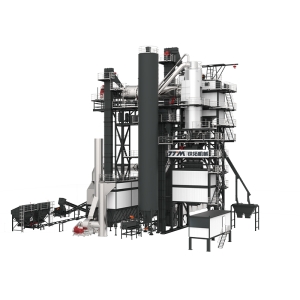
In road rehabilitation and expressway overlay projects, disposing of milled reclaimed asphalt pavement (RAP) in landfill is both environmentally undesirable and economically wasteful — yet many older asphalt plants cannot reintroduce RAP above 10–15 % without causing blue-smoke emissions, uneven heating, or virgin-mix-quality deviation. The TS4020 RAP Recycling Hot Asphalt Mixing Plant — Stationary Batch Type Hot Recycling Asphalt Plant with Up to 50 % RAP (Reclaimed Asphalt Pavement) Feeding Ratio Baghouse Dust Collector Secondary Combustion Chamber for Eco-Friendly Road Resurfacing (OEM from Fujian Tietuo Machinery Co., Ltd., TTM® Brand) is engineered to close that loop. Its parallel-flow RAP heating drum (or dual-drum configuration with virgin-aggregate pre-dry and separate RAP ring-burner zone) raises reclaimed material to working temperature withoutoverheating the aged binder, after which the hot RAP is metered into the pugmill mixer together with fresh aggregates, fresh bitumen, and rejuvenating agent (if required). The plant's baghouse collector and secondary combustion chamber control blue-smoke VOCs released during RAP heating — keeping stack emissions within EN 12697-47 / EPA reference limits. But how does the dual-zone heating prevent binder degradation, what rejuvenator dosing strategy recovers the old asphalt's performance, and which project types gain the most from 30–50 % RAP incorporation? Here is the full breakdown for highway contractors, asphalt plant operators, and DOT specification writers.
How the RAP Recycling Circuit Works in a Batch Mix Plant
A TS4020 RAP Recycling Hot Asphalt Mixing Plant — Stationary Batch Type Hot Recycling Asphalt Plant with Up to 50 % RAP (Reclaimed Asphalt Pavement) Feeding Ratio Baghouse Dust Collector Secondary Combustion Chamber for Eco-Friendly Road Resurfacing (OEM from Fujian Tietuo Machinery Co., Ltd., TTM® Brand) adds three key subsystems to a standard LB-series batch plant:
- RAP Cold-Feed & Pre-Screen: Milled RAP (typically 0–40 mm) is drawn from a dedicated bin, passed over a vibrating scalping screen to remove oversize (> 40 mm lumps, debris), and fed at a controlled rate into the RAP heating drum.
- RAP Heating Drum with Independent Burner / Zoned Temperature Control: Unlike virgin-aggregate dryers that reach 160–180°C, the RAP drum targets a discharge temperature of 110–140°C (adjusted per RAP moisture & target mix temp). A lower-temperature, longer-residence-time design avoids oxidizing the aged binder (which would embrittle it) while still driving off residual moisture.
- Metered RAP Introduction to Pugmill: After weighing, hot RAP is dropped into the twin-shaft paddle mixer aftervirgin aggregates have been briefly dry-mixed (or simultaneously in some control logics) — this ensures thorough coating of RAP granules with fresh bitumen/rejuvenator and avoids localized cold spots.
Optional Rejuvenating Agent (Softener / Flux Oil) Injection System: If the RAP binder Penetration has dropped below spec (typically < 20 dmm), a metered dose of aromatic extract or engineered rejuvenator is sprayed into the mixer to restore workability — dosage 0.2–0.8 % by total binder mass, determined by binder recovery testing.
Key Specifications (From TTM TS4020 Product Page)
- Model: TS4020 RAP Recycling Hot Asphalt Mixing Plant
- Type: Stationary batch mix with parallel-flow or counter-flow RAP drum (configurable)
- Rated Output Capacity: Typically 160 t/h (base LB1600 chassis) — exact rating depends on virgin-mix baseline; RAP inclusion reduces virgin-aggregate throughput proportionally
- Max. RAP Feeding Ratio: ≤ 50 % of total mix (by weight) — subject to RAP moisture, binder grade, and local spec approval
- RAP Heating Temp. Control Range: 110–150°C (auto PID control per discharge probe)
- Mixer: Twin-shaft compulsory paddle pugmill — mixing time 35–45 s/tch; liner & paddle Ni-hard or high-Cr cast
- Dust Collection: Pulse-jet baghouse (Nomex® / PPS filter bags) — emission ≤ 20 mg/Nm³ (meets most national standards)
- Secondary Combustion Chamber (Blue-Smoke Afterburner): 2-sec residence @ 650–850°C to destroy VOCs / blue smoke from RAP heating — required for > 30 % RAP in some jurisdictions
- Control System: PLC-based auto-batching with recipe storage, RAP ratio override, real-time trend display, production report export (CSV/Excel)
- Installation Footprint (Approx.): 40 m × 25 m (L × W) excluding aggregate / RAP stockpile zones
- Power Requirement: ~280–350 kW total installed (varies with ancillaries & dryer burner capacity)
- Certifications (on request): CE (for EU market), ISO 9001:2015 QMS, emission test report per local authority
Typical Application Scenarios
- Highway / Expressway Rehabilitation & Overlay: Mill 4–6 cm, feed RAP directly back @ 30–50 % into new wearing / binder course — cuts virgin aggregate purchase by up to half and reduces landfilled waste.
- Municipal Road Resurfacing Programmes: City-wide mill-and-fill — centralised RAP recycling plant serves multiple job sites; lower carbon footprint vs. 100 % virgin mix.
- Airport Taxiway / Apron Overlay (Where RAP Use Permitted): Some aviation authorities allow up to 20–30 % RAP in non-critical courses — verify with engineer / spec.
- Contractor Fleet Modernisation: Retrofit existing LB-series batch plant with RAP circuit (cold bin, drum, weigh hopper modification, control SW update) — TTM provides retrofit kits.
- Eco-Certification / Green-Rating Projects: Demonstrating recycled-material content supports LEED / BREEAM credits for sustainable construction materials (local rating system dependent).
RAP Binder Rejuvenation — When and Why It Matters
Old asphalt binder in RAP has been oxidized (hardened) by years of traffic & UV. Simply reheating it in the mix does notrestore penetration. If your mix design calls for a target binder Penetration of 60–80 dmm (typical for AC-20 / AC-25 base/binder course) and recovered RAP binder tests at 15–25 dmn:
- Perform Binder Recovery (Abson / Rotavapor Method per AASHTO T164 / EN 12697-4).
- Blend Recovered RAP Binder + Fresh Binder in Lab: Determine if fresh-bitumen alone (higher penetration grade, e.g., 100–120 pen) can soften the blend to target — often sufficient when RAP % is ≤ 20–25 %.
- If Still Too Stiff → Add Rejuvenator: Engineer selects aromatic-extender or bio-based rejuvenator; lab verifies final blend meets softening point, ductility, and aging-index criteria.
- Field Dose via Metering Pump: Linked to RAP weigh signal — auto-adjusts with recipe change.
Sourcing Checklist for Asphalt Plant Operators & Contractors
When requesting a quote for the TS4020 RAP Recycling Hot Asphalt Mixing Plant — Stationary Batch Type Hot Recycling Asphalt Plant with Up to 50 % RAP (Reclaimed Asphalt Pavement) Feeding Ratio Baghouse Dust Collector Secondary Combustion Chamber for Eco-Friendly Road Resurfacing (OEM from Fujian Tietuo Machinery Co., Ltd., TTM® Brand):
- ✅ Confirm target hourly output & RAP % range you intend to run (e.g., 160 t/h @ 30 % RAP vs. 120 t/h @ 50 % RAP).
- ✅ Specify existing plant model (if retrofitting) — TTM can adapt RAP circuit to LB1000/LB1500/LB2000 etc.
- ✅ Ask about emission-compliance package — baghouse bag grade + secondary combustion chamber (yes/no, temp setpoint) per your local environmental permit.
- ✅ Request mix-design support / RAP-evaluation service — TTM lab can advise on rejuvenator need based on submitted RAP sample.
- ✅ Inquire about training & commissioning scope — operator training on RAP ratio adjustment, rejuvenator calibration, blue-smoke afterburner operation.
Conclusion: Turn Milled Waste Into Spec-Compliant Asphalt
The TS4020 RAP Recycling Hot Asphalt Mixing Plant — Stationary Batch Type Hot Recycling Asphalt Plant with Up to 50 % RAP (Reclaimed Asphalt Pavement) Feeding Ratio Baghouse Dust Collector Secondary Combustion Chamber for Eco-Friendly Road Resurfacing (OEM from Fujian Tietuo Machinery Co., Ltd., TTM® Brand) transforms a disposal problem — milled asphalt — into a cost-saving raw material without compromising mix performance. Its zoned RAP heating protects aged binder from overheating, the pugmill ensures homogeneous coating with fresh bitumen (± rejuvenator), and the combined baghouse + afterburner keeps emissions within regulated limits even at 50 % RAP feed. For highway contractors, municipal public-works departments, and asphalt producers seeking to lower virgin-aggregate & bitumen spend while meeting sustainability goals, specifying a TTM TS-series RAP recycling plant is the technically sound, economically defensible choice.