
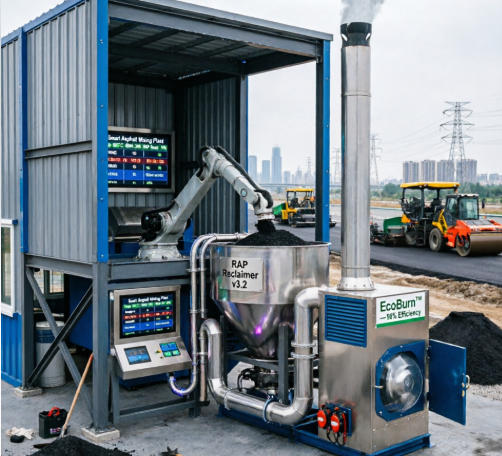
In today’s construction industry, sustainability is no longer optional—it is a necessity. With growing global environmental concerns and rising operational costs (such as fuel and raw materials), traditional asphalt production models are undergoing a profound transformation.
Modern Smart Asphalt Mixing Plants are becoming the key to achieving long-term sustainable infrastructure by integrating advanced automation systems, efficient recycling technologies, and energy management systems. This article explores how these technologies help contractors reduce costs while minimizing their environmental footprint.
1. The Core Driver: From Traditional Production to Smart Control
In the past, asphalt production relied heavily on virgin materials quarried from the earth. However, resource limitations and tightening environmental regulations have forced the industry to seek new solutions.
Smart Monitoring Systems act as the "brain" of the modern asphalt mixing plant. Through IoT (Internet of Things) sensors, plant operators can monitor key metrics in real-time:
Asphalt Temperature & Mix Consistency: Ensures every batch meets quality standards, reducing rework and material waste caused by不合格 quality.
Moisture Content & Aggregate Ratios: Precise proportioning control not only improves pavement durability but also optimizes binder usage.
Machine Health: Predictive maintenance reduces unexpected downtime and extends the equipment's lifespan.
This intelligent management approach not only improves production consistency but also significantly lowers the risk of human error.
2. Asphalt Recycling Technology: The Choice Between Hot and Cold
Among all sustainable technologies, Asphalt Recycling is the most transformative. By reusing old pavement materials (RAP - Reclaimed Asphalt Pavement), we not only conserve precious natural resources but also drastically reduce project costs.
3. Energy Consumption Analysis & Fuel Cost Reduction Strategies
Energy consumption is one of the largest operating costs in asphalt production. To remain competitive, reducing fuel consumption has become a top priority for every operator. Here are key technologies used by modern energy-efficient asphalt plants:
Optimized Combustion & Drying Systems: High-efficiency burners and optimized dryer drum designs maximize heat transfer efficiency. Advanced flame control systems ensure fuel is fully combusted, reducing heat loss.
Aggregate Moisture Control: The moisture content of raw materials directly impacts fuel demand. Best practices include building covered aggregate storage areas and optimized drainage systems to control feed humidity.
Advanced Insulation Technology: Improved insulation materials are used to maintain stable operating temperatures, reducing heat dissipation into the environment.
Through these measures, modern asphalt mixing plants not only lower carbon emissions but also maintain a cost advantage in a market with fluctuating energy prices.
4. Addressing Dust and Emission Challenges
Environmental compliance is another critical challenge in modern asphalt production. Dust and emissions, while related, require different control strategies:
Dust Control: Primarily generated during aggregate drying, screening, and conveying. Modern plants employ high-efficiency dust collection systems and enclosed conveyors to reduce particulate matter emissions and improve air quality.
Emission Management: By optimizing the combustion process through smart automation systems, harmful gas emissions can be effectively reduced.
5. Conclusion: Infrastructure for a Greener Future
From the quarry to the paving site, technological advancements in modern asphalt mixing plants are redefining infrastructure construction. By adopting Smart Asphalt Mixing Plants, contractors can not only produce safer, more durable roads (offering better skid resistance and load-bearing capacity) but also actively support global environmental goals.
Whether through RAP Recycling to save resources or Energy-Efficient Technologies to lower operating costs, investing in advanced asphalt production equipment is a wise move for achieving long-term sustainability and economic efficiency.